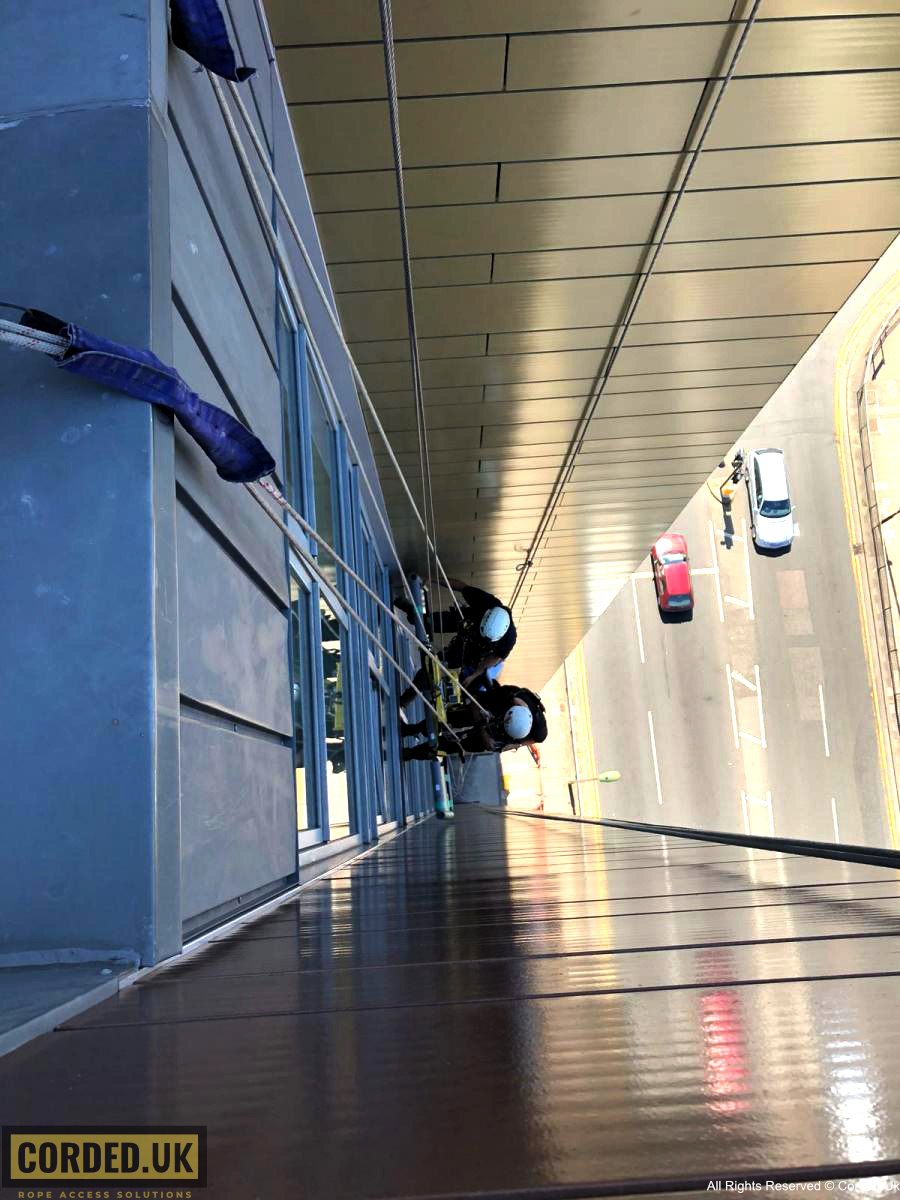
Rope access solutions have revolutionised the way we approach tasks at height, offering a practical and efficient alternative to traditional scaffolding and mechanical lift systems. This technique, which relies on ropes and specialised equipment, allows technicians to reach otherwise inaccessible areas safely and swiftly. Whether it’s for building maintenance, repair work, or inspections, rope access provides a versatile and cost-effective method for working at height. In this guide, we will explore the ins and outs of rope access solutions, shedding light on the benefits, applications, and safety protocols involved. Join us as we unravel everything you need to know about this innovative approach to working at height.
Understanding Rope Access Solutions
What is Rope Access?
Rope access is a technique that employs ropes and specialised equipment to enable workers to access difficult-to-reach areas, often at significant heights. Unlike traditional methods like scaffolding or lifts, rope access solutions rely on the skill and training of technicians who use harnesses, ropes, and other safety gear to manoeuvre themselves into position. This method is particularly advantageous in environments where space is limited or where installing scaffolding would be impractical and costly. The versatility of rope access makes it suitable for a wide range of applications, from building maintenance and window cleaning to complex industrial inspections and repairs. Its efficiency and cost-effectiveness have made it a popular choice for many industries that require work at height. By minimising setup time and utilising highly trained personnel, rope access solutions offer a safe and practical alternative to more cumbersome traditional methods.
History of Rope Access Solutions
The origins of rope access solutions can be traced back to the techniques used by climbers and cavers in the mid-20th century. These pioneers adapted their skills to industrial settings, recognising the potential for using ropes to access challenging locations safely. In the 1980s, rope access began to formalise as an industry, with the development of standards and training programmes to ensure safety and consistency. Organisations like the Industrial Rope Access Trade Association (IRATA) played a pivotal role in establishing guidelines and promoting best practices. Over the years, advancements in equipment and training have further enhanced the safety and efficiency of rope access techniques. Today, it is regarded as a reliable and professional method for working at height, employed across various sectors, including construction, offshore oil and gas, and renewable energy. Its evolution reflects the growing demand for innovative solutions that address the complexities of modern industrial environments.
Key Benefits of Using Rope Access
Rope access solutions offer numerous advantages over conventional methods for working at height. Firstly, they are highly cost-effective, eliminating the need for expensive scaffolding or heavy machinery. This reduction in equipment costs also translates to quicker setup times, allowing projects to commence and conclude more swiftly. Moreover, rope access minimises disruption at worksites, as the equipment used is far less intrusive than traditional structures. Safety is another significant benefit; rope access technicians undergo rigorous training and certification, ensuring that they meet high safety standards. This method also provides unparalleled versatility, making it applicable to a wide range of tasks, from maintenance and repairs to detailed inspections. Furthermore, rope access solutions are environmentally friendly, as they require fewer materials and resources than alternative methods. These benefits make rope access an ideal choice for industries looking to efficiently manage projects while maintaining high safety and environmental standards.
Applications of Rope Access Solutions
Industrial Applications
Rope access solutions are extensively used across various industrial sectors, providing safe and efficient methods for executing a range of tasks. In the oil and gas industry, rope access is invaluable for conducting inspections, maintenance, and repairs on offshore platforms and rigs, where traditional access methods are impractical. Similarly, in the renewable energy sector, rope access is essential for maintaining wind turbines, allowing technicians to perform tasks at great heights with precision and safety. The construction industry benefits from rope access for building maintenance, facade repairs, and window cleaning, especially in urban environments with limited space. In addition, the telecommunications sector utilises rope access for installing and maintaining antennae and masts. This technique is also employed in the inspection and maintenance of bridges, dams, and other infrastructure. Overall, the adaptability and reliability of rope access solutions make them a preferred choice for industries that require specialised work at height.
Construction and Maintenance
In the construction and maintenance sectors, rope access solutions have emerged as a practical and efficient choice for a myriad of tasks. The technique is particularly advantageous for high-rise building projects, where it facilitates activities like facade installation and window cleaning without the need for obtrusive scaffolding. Maintenance tasks, such as painting, sealing, and structural inspections, are seamlessly executed using rope access, ensuring minimal disruption to building occupants and surroundings. Furthermore, rope access solutions are ideal for refurbishing older structures, where traditional access methods might be restricted due to architectural constraints. The method’s precision and adaptability enable technicians to reach challenging areas, ensuring comprehensive maintenance and repair works. By reducing setup times and equipment needs, rope access proves to be both time-saving and cost-effective, making it a preferred method for construction and maintenance tasks that demand flexibility and efficiency.
Emergency and Rescue Operations
Rope access solutions play a critical role in emergency and rescue operations, offering swift and reliable methods for reaching individuals in precarious situations. In urban settings, rope access is used by rescue teams to safely evacuate people from high-rise buildings during emergencies, such as fires or structural failures. In remote or rugged terrains, this technique allows search and rescue operations to access difficult-to-reach locations, ensuring help is provided swiftly. The high level of training and expertise possessed by rope access technicians equips them with the skills necessary to perform delicate and potentially hazardous rescues safely. Furthermore, the minimal equipment footprint of rope access ensures rapid deployment, which is crucial in time-sensitive situations. Its versatility also means that it can be integrated with other rescue techniques, enhancing overall operational effectiveness. As a result, rope access solutions are an invaluable resource in emergency scenarios where conventional methods may be insufficient or delayed.
Equipment and Techniques in Rope Access
Essential Rope Access Gear
Rope access solutions rely on a combination of specialised gear designed to ensure safety and efficiency during operations. The harness, a fundamental component, is worn by technicians to secure them to the ropes and distribute weight evenly, reducing fatigue during prolonged tasks. Ropes, typically made from durable synthetic materials, serve as both the primary and backup lines, providing the necessary support and redundancy. Descenders and ascenders are critical devices that allow controlled movement up or down the ropes, offering precise manoeuvrability. Additionally, carabiners and connectors link various pieces of equipment, ensuring secure attachments. Helmets are essential for protecting technicians from falling debris or unexpected impacts. Other safety gear, such as gloves and protective eyewear, further enhance safety during operations. Each piece of equipment is meticulously designed and tested to meet rigorous safety standards, ensuring that rope access solutions are conducted with the highest level of safety and reliability.
Basic Techniques for Beginners
For those new to rope access solutions, mastering basic techniques is essential for ensuring safety and efficiency. One of the foundational skills is learning how to properly don and adjust the harness, ensuring it fits securely and comfortably. Beginners must also familiarise themselves with knot-tying, a critical skill for securing ropes and equipment. Techniques for ascending and descending ropes are central to rope access, with ascenders and descenders playing a key role in facilitating controlled movement. Practising these manoeuvres in a safe, controlled environment is vital before attempting real-world applications. Additionally, understanding how to set up and use backup safety systems provides an additional layer of security. Beginners should also be trained in risk assessment and the proper use of personal protective equipment (PPE), such as helmets and gloves. Under expert supervision, these fundamental techniques build confidence and competence, forming the basis for more advanced rope access skills.
Advanced Techniques for Professionals
For seasoned practitioners of rope access solutions, mastering advanced techniques is crucial for tackling more complex tasks and environments. One of the key skills is learning advanced rigging techniques, which involve setting up intricate rope systems to navigate challenging terrains or structures. Rescue techniques also form a core component of advanced training, enabling professionals to perform safe and effective rescues in emergency situations. Professionals are often skilled in multi-pitch climbing, which requires transitioning smoothly between multiple rope systems. Complex manoeuvres, such as rope-to-rope transfers and using tensioned lines, are also part of a professional’s repertoire, allowing them to work efficiently across large and intricate structures. Additionally, advanced practitioners are adept at conducting detailed risk assessments and developing comprehensive safety plans tailored to specific job sites. Continuous training and staying updated with the latest equipment and methodologies are essential for maintaining proficiency and ensuring the highest standards of safety and effectiveness in rope access operations.
Safety and Regulations in Rope Access
Importance of Safety Standards
Safety standards are paramount in rope access solutions, ensuring that all operations are conducted with minimal risk to personnel and property. These standards provide a framework for best practices, including the proper use of equipment, training requirements, and operational procedures. Organisations like the Industrial Rope Access Trade Association (IRATA) and the Society of Professional Rope Access Technicians (SPRAT) have set stringent guidelines that must be adhered to by practitioners. Compliance with these standards is essential, as it reduces the likelihood of accidents and enhances the overall safety of rope access projects. Safety standards also mandate regular inspections and maintenance of equipment, ensuring that all gear is in optimal condition. By following these established protocols, companies can demonstrate their commitment to safety, which not only protects workers but also bolsters their reputation. In an industry where the margin for error is small, adherence to safety standards is vital for maintaining trust and ensuring successful outcomes.
Regulatory Bodies and Guidelines
Regulatory bodies and guidelines play a crucial role in maintaining safety and standardisation in the rope access industry. Key organisations, such as the Industrial Rope Access Trade Association (IRATA) and the Society of Professional Rope Access Technicians (SPRAT), have established comprehensive frameworks that dictate the safe conduct of rope access operations. These bodies provide certification programmes and set out detailed guidelines covering everything from equipment use to worker training and operational procedures. Compliance with these standards is often a requirement for contractors and companies operating in high-risk environments. Additionally, national and international safety regulations, such as those from the Health and Safety Executive (HSE) in the UK and the Occupational Safety and Health Administration (OSHA) in the USA, enforce legal obligations to ensure worker safety. By adhering to these guidelines, companies not only enhance safety but also improve operational efficiency, reduce liability, and uphold their professional reputation in the industry.
Training and Certification Requirements
Training and certification are fundamental to ensuring the safety and proficiency of those engaged in rope access solutions. To become a certified rope access technician, individuals must undergo rigorous training programmes that cover a wide range of skills, including knot-tying, rope handling, and emergency rescue procedures. These courses are typically offered by accredited organisations such as the Industrial Rope Access Trade Association (IRATA) and the Society of Professional Rope Access Technicians (SPRAT), which provide tiered certification levels, from entry-level to advanced. Each certification level requires passing both practical and theoretical assessments to demonstrate competency. Regular recertification is often mandated to ensure technicians remain up-to-date with the latest safety practices and technological advancements. Additionally, ongoing training sessions are encouraged to refine skills and address any updates in safety regulations. This structured approach to training and certification is essential for maintaining high safety standards and ensuring that technicians can effectively and safely perform their duties in various settings.
Choosing the Right Rope Access Provider
Evaluating Experience and Expertise
When selecting a rope access provider, evaluating their experience and expertise is crucial to ensuring successful project outcomes. A provider’s track record in handling projects similar to yours is often a strong indicator of their capability. Reviewing case studies or testimonials from previous clients can offer insights into their level of expertise and reliability. It’s also important to assess the qualifications of their technicians, ensuring they hold relevant certifications from recognised bodies like IRATA or SPRAT. Providers with a team of well-trained and certified technicians are more likely to adhere to safety standards and deliver high-quality work. Additionally, consider the provider’s commitment to ongoing training and development, as this reflects their dedication to maintaining up-to-date skills and knowledge. Engaging with a rope access provider that demonstrates a strong blend of experience and expertise not only enhances the likelihood of project success but also ensures that safety and efficiency are prioritised throughout the operation.
Understanding Service Offerings
Understanding the service offerings of a rope access provider is essential to determine if they align with your project needs. Providers should offer a comprehensive range of services, including inspection, maintenance, repair, and installation, tailored to various industries such as construction, oil and gas, and renewable energy. It’s important to inquire about the specific techniques and equipment they utilise, ensuring they are suitable for the particular challenges of your site. Additionally, providers that offer bespoke solutions demonstrate flexibility and a willingness to adapt to unique project requirements. Assessing the provider’s ability to integrate additional services, like environmental management or technical reporting, can also add value to your project. Transparent communication about service scope, timelines, and pricing is crucial to avoid misunderstandings. By thoroughly evaluating a provider’s service offerings, you can ensure they possess the necessary expertise and resources to meet your specific needs effectively and efficiently.
Ensuring Quality and Compliance
Ensuring quality and compliance is a critical aspect when choosing a rope access provider. Quality assurance processes should be in place to guarantee that all work meets industry standards and client expectations. Providers should adhere to established safety protocols and possess relevant certifications from bodies like IRATA or SPRAT, which signify adherence to high safety and operational standards. Reviewing a provider’s health and safety records can offer insights into their compliance history and commitment to safe practices. Additionally, ISO certifications or similar accreditations can indicate a provider’s dedication to maintaining quality management systems. It’s also beneficial to verify that their equipment is regularly inspected and maintained, ensuring it meets all safety requirements. A reputable provider will be transparent about their compliance status and quality assurance measures. By prioritising quality and compliance, you can ensure that your rope access projects are executed safely, effectively, and to the highest professional standards.