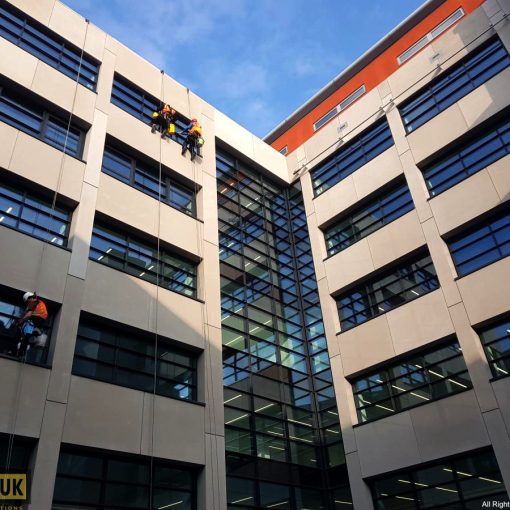
In the world of high-rise maintenance, rope access glass cleaning is emerging as the go-to method for keeping towering buildings spotless. As urban skylines continue to grow, traditional cleaning methods often fall short, grappling with safety concerns and inefficiencies. Rope access offers a practical solution, combining safety and cost-effectiveness while ensuring that even the tallest structures gleam. This technique not only reduces operational costs but also minimises disruption to daily activities within these towering edifices. Let us delve into why rope access glass cleaning is swiftly becoming the method of choice for high-rise maintenance across the UK and beyond.
The Rise of Rope Access
As high-rise buildings dot our cities, maintaining their pristine condition has become vital. Rope access has risen as a favoured technique in this domain, offering a host of advantages over older methods. This section will explore the background, development, and shortcomings of traditional cleaning approaches, highlighting the ascendancy of rope access.
Historical Context of Rope Access
Rope access as a method has roots in climbing and caving, where safety and agility were paramount. Developed primarily in the 1980s, it adapted techniques used by climbers to industrial settings. This transition was driven by the need for safer and more efficient ways to access difficult-to-reach areas.
Initially, industries like offshore oil and construction quickly embraced rope access. These sectors needed reliable access solutions for inspecting and maintaining structures. The technique’s ability to provide a secure, flexible platform for workers made it an ideal choice.
Over time, rope access has expanded beyond its initial use, becoming integral to high-rise maintenance. Its safety record and efficiency have made it a preferred choice for cleaning high-rise glass and other challenging tasks. Today, it stands as a testament to how techniques from adventurous sports can revolutionise industrial maintenance.
Evolution in High-Rise Maintenance
High-rise maintenance has evolved significantly over the decades. Initially, it relied heavily on scaffolding and cradles. These methods, while effective, came with several disadvantages. They were often cumbersome, expensive, and time-consuming to set up.
The introduction of rope access marked a significant shift. It offered a more streamlined alternative, eliminating the need for bulky equipment. Workers could quickly descend from the roof or other anchor points, reaching cleaning sites with minimal fuss.
Many buildings now incorporate rope access systems into their design. This anticipatory approach simplifies maintenance, reducing long-term costs and logistical challenges. As urban architecture continues to reach new heights, rope access is set to play an even more crucial role.
Why Traditional Methods Fall Short
Traditional cleaning methods, such as scaffolding and cradles, often struggle to meet the demands of modern buildings. Their limitations are evident in several key areas:
- Cost: Scaffolding and cradles require significant investment in materials and labour.
- Time: Setting up and dismantling these systems is time-consuming, often leading to extended project timelines.
- Flexibility: Once erected, scaffolding is not easily moved, limiting access to specific areas.
Additionally, these methods pose safety risks. Workers face potential falls and equipment failures. Rope access, by contrast, offers a safer, more adaptable solution, addressing these traditional shortcomings effectively.
Safety First: Rope Access Benefits
Safety is paramount in high-rise maintenance, and rope access excels in this area. By employing advanced safety measures and rigorous training standards, it minimises risks associated with traditional methods. This section delves into the safety advantages of rope access.
Enhanced Safety Measures
Rope access is synonymous with safety. Workers are connected to two independent anchor points at all times, providing a fail-safe mechanism. This ensures that even if one line fails, the other supports the worker, dramatically reducing fall risks.
The equipment used in rope access is meticulously maintained. Regular inspections ensure that ropes, harnesses, and other gear meet stringent safety standards. This attention to detail is critical in preventing accidents.
Moreover, workers undergo comprehensive safety training. This prepares them to handle equipment confidently and respond effectively to emergencies. As a result, rope access boasts an impressive safety record, with fewer incidents compared to traditional methods.
Minimising Risks and Hazards
Rope access minimises risks in several ways. Firstly, it reduces the need for heavy equipment, which can pose hazards if not properly secured. Workers rely on lightweight gear, which is easier to manage and less prone to mechanical failure.
Additionally, the flexibility of rope access allows workers to avoid dangerous areas. They can navigate around obstacles and unstable surfaces, reducing exposure to potential hazards.
Finally, the constant focus on safety protocols ensures that workers are always prepared. Regular drills and updates to best practices keep safety at the forefront, further minimising the chances of accidents.
Professional Training and Standards
Training is a cornerstone of rope access. Workers must complete rigorous courses to become certified. These programmes cover everything from equipment handling to emergency response, ensuring that all personnel are well-prepared.
Certification bodies, such as the Industrial Rope Access Trade Association (IRATA), set high standards for training. They mandate consistent re-evaluation to keep skills sharp and aligned with the latest safety practices.
This commitment to professional standards is reflected in the industry’s safety record. Rope access remains one of the safest methods for high-rise maintenance, thanks to its emphasis on thorough training and stringent standards.
Efficiency and Cost-Effectiveness
Rope access is not only safe but also efficient and cost-effective. It enables quick, flexible cleaning solutions without breaking the bank. This section explores these economic benefits, highlighting why it outshines traditional methods.
Speed of Rope Access Cleaning
Rope access allows for rapid deployment, which is one of its key advantages. Workers can quickly set up and begin cleaning, without the need for extensive scaffolding or equipment assembly.
The agility of rope access workers enables them to cover large areas swiftly. They can navigate around the building with ease, ensuring that every window and surface is addressed efficiently.
This speed translates to shorter project timelines. Buildings can be cleaned in a fraction of the time it would take using traditional methods, reducing downtime and disruption.
Cost Savings Compared to Alternatives
Rope access offers significant cost savings. The absence of scaffolding and heavy equipment reduces material costs. Additionally, the quicker project completion times reduce labour expenses, as fewer hours are required to finish the job.
Buildings that integrate rope access systems also benefit from lower long-term maintenance costs. By streamlining the cleaning process, property owners can allocate resources more effectively, preserving budgets for other critical needs.
These savings make rope access an attractive option for high-rise maintenance, providing quality service without the hefty price tag.
Minimal Disruption to Building Operations
One of the greatest advantages of rope access is its minimal disruption to building operations. Traditional methods often require road closures or space reallocation, affecting daily activities.
Rope access eliminates these issues. Workers can clean without obstructing entrances, windows, or pathways, ensuring that businesses and residents can continue their routines undisturbed.
By maintaining building operations, rope access enhances tenant satisfaction. This non-intrusive approach is particularly beneficial in busy urban environments, where interruptions are costly and inconvenient.
Environmental and Aesthetic Impact
Rope access is not just efficient and safe; it also benefits the environment and enhances building aesthetics. This section will explore the eco-friendly nature of rope access and its long-term benefits for property owners.
Eco-Friendly Cleaning Techniques
Rope access often employs environmentally friendly cleaning methods. Eco-friendly detergents and water-saving techniques are standard, minimising the environmental footprint.
The reduced need for scaffolding and heavy machinery lowers emissions associated with transport and assembly. This makes rope access a more sustainable choice for building maintenance.
Furthermore, the ability to clean effectively without harsh chemicals protects local ecosystems. This aligns with growing societal demands for eco-conscious practices in all industries, including building maintenance.
Preserving Building Aesthetics
Rope access plays a crucial role in preserving building aesthetics. The agility and precision of workers allow for meticulous cleaning, reaching every corner and crevice.
Regular maintenance with rope access prevents the buildup of grime and pollutants, which can damage surfaces over time. This ensures that buildings retain their visual appeal, contributing to a positive urban environment.
Preserving aesthetics is essential not only for the building’s appearance but also for maintaining its value. Clean, well-maintained structures are more attractive to tenants and can command higher rents and resale values.
Long-Term Benefits for Property Owners
Property owners stand to gain significantly from using rope access. Regular, effective cleaning extends the lifespan of building materials, reducing the frequency of costly repairs or replacements.
Increased tenant satisfaction is another benefit, as clean buildings are more appealing places to live and work. Happy tenants are more likely to renew leases, ensuring steady income for property owners.
Overall, rope access offers a cost-effective, efficient solution that enhances a building’s longevity, aesthetics, and value, making it a wise investment for property owners.
Future Trends in High-Rise Maintenance
As rope access continues to evolve, new trends are emerging in high-rise maintenance. From technological innovations to expanded applications, these developments highlight the future potential of rope access.
Technological Innovations in Rope Access
The integration of technology is revolutionising rope access. Drones and smart systems are increasingly being used to complement traditional methods, providing additional safety and efficiency.
Drones can be deployed to inspect areas before workers descend, identifying potential hazards. Smart systems allow for real-time monitoring of equipment, ensuring that all safety standards are met.
These technological advancements are set to enhance the capabilities of rope access, making it even more efficient, safe, and reliable in the years to come.
Expanding Applications Beyond Glass Cleaning
Rope access is no longer limited to glass cleaning. Its versatility allows for a range of applications, from building inspections to maintenance and repair works.
Industries such as construction, telecommunications, and renewable energy are adopting rope access for various tasks. Its ability to provide safe, efficient, and cost-effective solutions is driving its expansion into new fields.
This diversification highlights the growing relevance of rope access across multiple sectors, underscoring its adaptability and potential for future growth.
The Growing Demand for Sustainable Practices
As sustainability becomes a global priority, the demand for eco-friendly maintenance practices is rising. Rope access aligns perfectly with this trend, offering a method that is both efficient and environmentally conscious.
Property owners and businesses are increasingly seeking ways to reduce their carbon footprints. Rope access provides a solution that meets these needs, minimising environmental impact while maintaining high standards of service.
This demand for sustainable practices is likely to drive further innovation in rope access, ensuring that it remains at the forefront of high-rise maintenance for years to come.